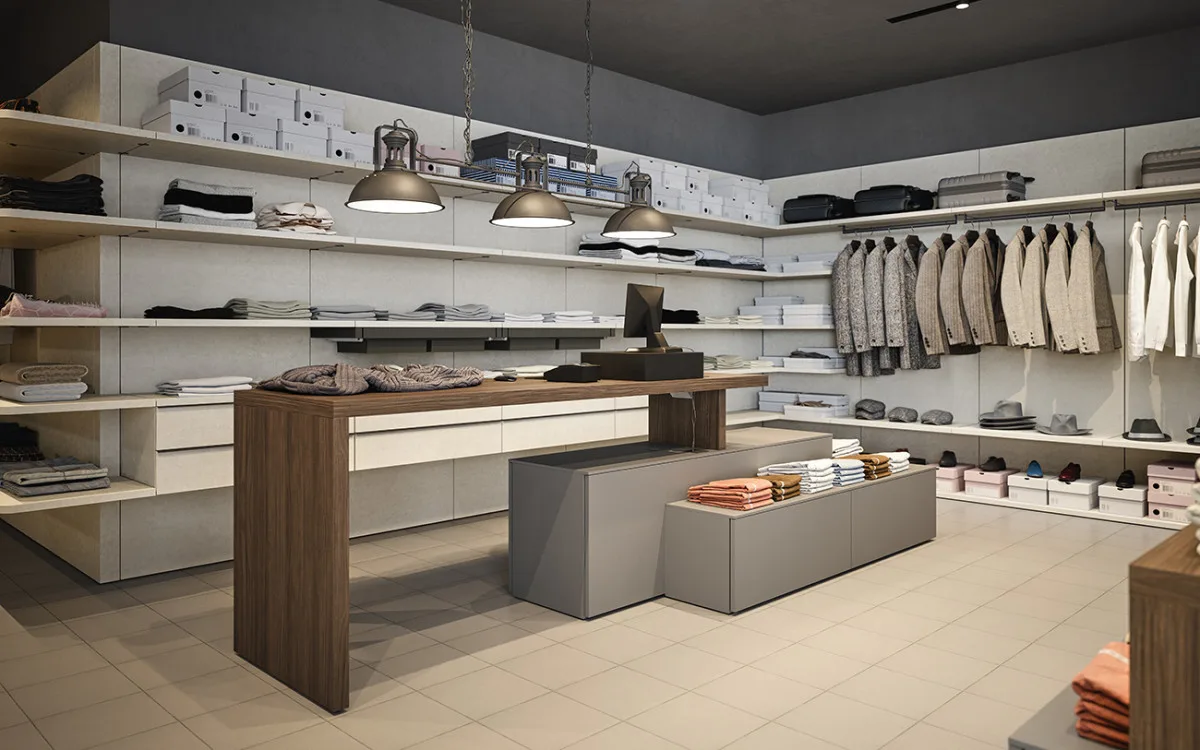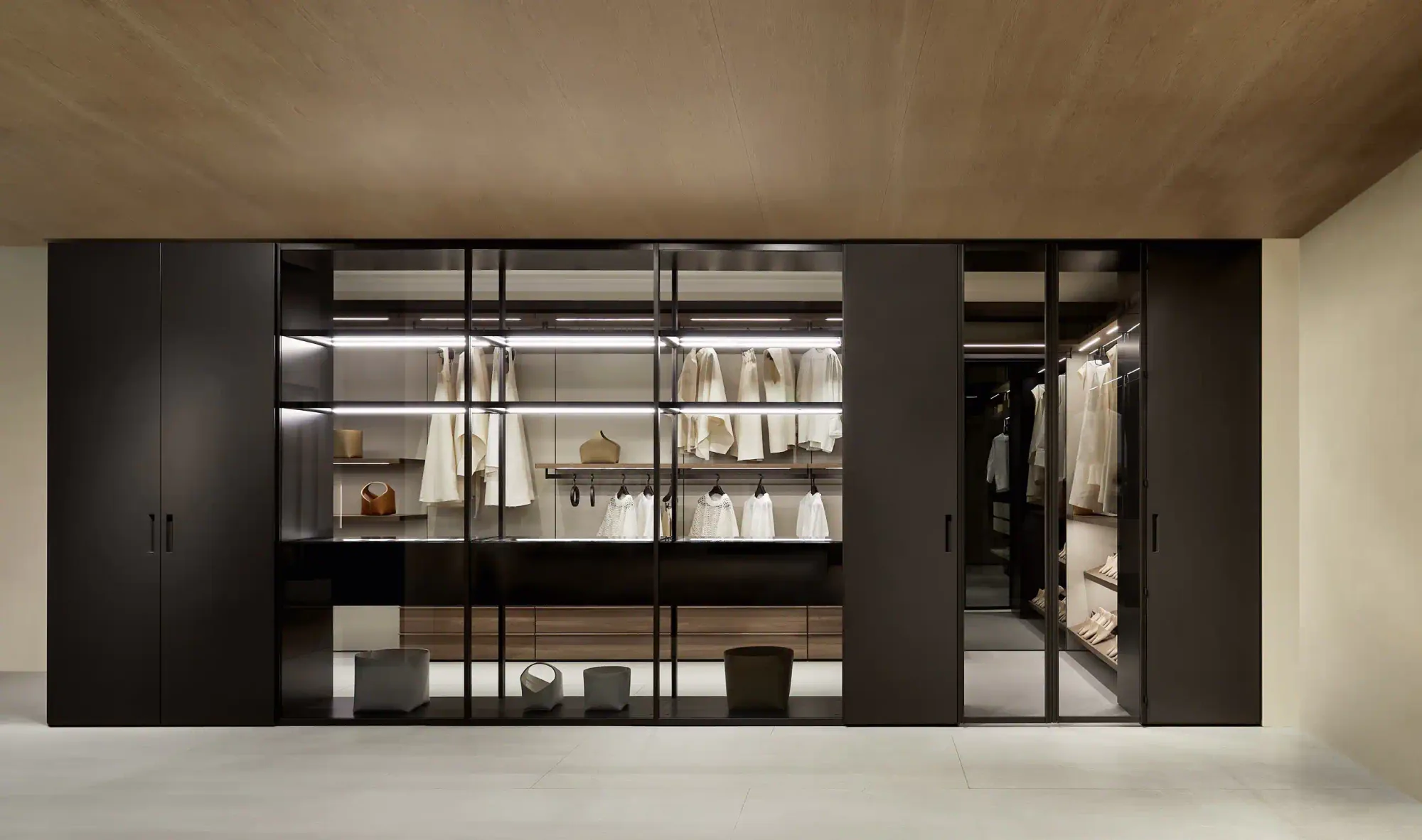
Drawers, shelves and hanging rails: how to distribute wardrobe space correctly
Internal organisation should reflect the quantity, size and frequency of use of clothing. This practical guide helps calibrate drawers, shelves and hanging rails.

The quality of a wardrobe depends not only on its total capacity, but on how space is divided between drawers, shelves and hanging rails. Three metres of storage can prove insufficient when categories occupy unsuitable compartments; a smaller composition can work well when every element supports a precise action. The internal layout should therefore begin with belongings and habits rather than a standard subdivision.
Drawers, shelves and rails perform complementary roles. Drawers protect and organise small items; shelves offer flexibility for folded garments and containers; hanging areas keep clothes visible and reduce creasing. No type is inherently superior. A balanced result comes from the right quantity of each, ergonomic positioning and the ability to adapt the structure over time.
Begin with the inventory, not the catalogue
Before selecting a configuration, estimate what needs to be stored. Clothing can be divided into shirts, jackets, trousers, dresses, skirts, knitwear, underwear, accessories, shoes, bags, luggage and seasonal items. Quantity, dimensions and preferred storage method should be considered for every category.
Personal habits radically change the distribution. Someone who frequently wears tailoring and shirts needs more hanging space; a person who uses knitwear and informal clothes requires more shelves; a large accessory collection benefits from divided drawers. The time available for tidying also matters: numerous stacks and deep containers demand more discipline.
The inventory should distinguish daily, frequent and seasonal use. This hierarchy determines height. The area between knee and eye level belongs to active categories, while upper zones can hold light, infrequently used belongings.
Establish an initial proportion
There is no universal percentage, but an initial estimate can translate quantities into linear space and volume. Hanging garments are measured along the rail, allowing for average hanger thickness. Folded clothing requires shelf area, while accessories and underwear are assessed by drawer volume.
The design should not operate at its absolute limit. A completely full rail makes clothes difficult to remove and replace. A saturated shelf creates unstable piles. A packed drawer conceals its contents. A moderate reserve distributed across all three functions improves everyday use and absorbs change.
The initial proportion should then be tested against real scenarios. If one category expands or the season changes, the system should be recalibrated without losing coherence.
Hanging rails: size for length and density
Hanging areas should at least distinguish short and long garments. Shirts, jackets, skirts and folded trousers can occupy lower compartments, while coats, dresses and full-length trousers need a clear bay. Measuring real clothes on the intended hangers prevents theoretical errors.
Where height allows, two superimposed rails increase capacity for short garments. The distance must make both levels visible and accessible without upper clothes touching those below. The most frequently used rail should remain within a natural reach zone.
High rails may use pull-down mechanisms, but these need operating space and suitable load capacity. They must not interfere with shelves, lights or doors. User height and the force required for movement also need consideration.
Leave room between hangers
Linear capacity is not the same as the maximum number of hangers that can be compressed onto a rail. Bulky textiles, jackets and coats occupy more room than shirts. Excessive density causes creasing, conceals garments and makes restoring order difficult.
Coordinated hangers in terms of form and thickness improve alignment and reduce visual noise. Different models are required for jackets, trousers and delicate items, but they can belong to the same material and colour family. Empty hangers need a dedicated position instead of accumulating among clothes.
A small free section on every important rail is useful. It provides room to move garments during selection and accommodates temporary additions without compressing everything.
Shelves: depth and vertical spacing
Shelves suit knitwear, jeans, bags and containers, but their effectiveness depends on proportion. When too far apart, they encourage tall piles that collapse; when too close, they restrict flexibility. Height adjustment allows the compartment to suit different categories.
Depth should accommodate the contents without creating an invisible second row. In deep modules, pull-out shelves or baskets make the rear accessible. Small objects need dividers or containers so they do not disperse across a broad surface.
Width affects load capacity. Long shelves carrying heavy knitwear or bags may deflect. Material, thickness, supports and clear span must be assessed together.
Organise folded garments
Stacks should remain low and category based. Separating light tops, heavy knitwear, trousers and sportswear reduces search time. When one shelf holds several groups, vertical dividers prevent them from merging.
Consistent folding helps use depth and keeps quantities readable. The system should nevertheless fit real garments rather than impose unrealistic dimensions. Bulky pieces may need a dedicated shelf or a taller container.
Seasonal items can occupy upper levels, preferably protected in breathable, recognisable boxes. Discreet labels prevent every container from being opened, but the composition should not resemble a visually crowded archive.
Drawers: protection and access
Drawers are ideal for underwear, accessories, belts, jewellery and small garments. They protect from dust and reduce visual noise. Their usefulness depends on position: daily items should not require excessive bending, while very high drawers are difficult to inspect.
Internal depth needs to suit the category. A tall drawer for small objects encourages stacking; one that is too shallow restricts clothing. Dividers, trays and small containers maintain separation and can be removed for cleaning.
Width requires care. One large drawer provides continuity but becomes heavy when full and needs suitable runners. Two smaller units may improve organisation while adding more front lines. The choice balances ergonomics, appearance and load.
Opening paths and operating space
Every drawer introduces an operating depth. Clearance in front of the unit must include full extension and the user’s position. In narrow passages, an open drawer can block circulation or strike the opposite front.
Doors and pull-out accessories also need simultaneous testing. A layout that works in elevation can fail in plan when opening paths overlap. Simulating movement or marking footprints on the floor is useful.
Soft-closing mechanisms improve comfort and quietness but require adjustment and maintenance. Handles, grooves and push-to-open systems must offer a suitable grip for the weight of the contents.
Create a central ergonomic zone
The most valuable area of a wardrobe is the zone accessible without stretching, bending or using equipment. Everyday rails, active shelves and primary drawers should concentrate here. Giving this space to less important functions forces frequently used belongings into awkward positions.
The lower area suits shoes, secondary drawers and robust containers, provided that it is easy to clean. The upper zone holds luggage, spare linen and seasonal rotation. Heavy objects should not need lifting above the head.
Standard heights must be adapted to users. In a shared wardrobe, separate zones or adjustable elements can respond to different needs while maintaining common visual alignments.
Integrate shoes and bags
Shoes and bags do not fit perfectly into the three main categories, yet they influence the distribution. Footwear needs inclined shelves or cleanable surfaces, appropriate depth and ventilation. Daily pairs should remain accessible, while seasonal shoes can stay in breathable boxes.
Bags require support and enough room to avoid deformation. Dividers keep them upright, and light filling can retain shape. Suspending heavy bags from their handles may create strain.
Locating these categories near the dressing zone makes movement more fluid, but they should not invade circulation or accumulate at the base of hanging areas.
Light for every level
A good internal distribution loses value when compartments remain dark. General illumination needs sources close to the contents. Vertical lines clarify hanging sections, lights beneath shelves illuminate stacks and surfaces, and local lighting may activate when a drawer opens.
Sources should be screened, offer good colour rendering and avoid heating fabrics. Wiring and drivers must remain accessible. Adjustable shelves and rails should not block light after reconfiguration.
Colour temperature should maintain the bedroom atmosphere without distorting clothing. Reflections and glare require particular control near mirrors.
Materials, loads and durability
Drawers, shelves and rails experience different forces. Rails transfer concentrated loads to supports, shelves work in bending, and drawers place weight on runners. Every component must respect its specified capacity and fixing method.
Resistant matt surfaces simplify maintenance. Shelf edges experience abrasion, drawer bottoms must support their contents without deformation, and rails need to withstand hanger movement.
Durability also depends on the ability to adjust, replace and clean parts. Accessible fittings and available replacements extend the system’s useful life.
Flexibility and seasonal review
Wardrobes change throughout the year and over longer periods. Movable shelves, repositionable rails and removable dividers allow the distribution to be recalibrated. Flexibility should be designed into the grid rather than achieved with random additions.
At the seasonal change, quantities can be reviewed, inactive clothes transferred and the central zone cleared. This is also an opportunity to inspect stacks, drawers and hanging density. A system with spare capacity makes the process faster.
Keeping a diagram of levels and components supports later alterations and helps prevent load limits from being exceeded.
Mistakes to avoid
Common mistakes include repeating the same configuration in every bay and selecting modules before completing the inventory. A wardrobe composed only of rails wastes space for someone who folds many garments; too many shelves create difficult piles; excessive drawers reduce visibility and increase the mass of fronts.
Other issues to avoid include:
- rails filled without a free margin;
- shelves that are too deep and cannot pull out;
- excessively tall stacks;
- heavy drawers positioned high;
- openings that block circulation;
- no area for long garments;
- lighting limited to the centre;
- no ventilation near shoes;
- fixed components that prevent change.
The most useful test is to simulate a real day, from choosing clothes to restoring order in the evening.
A distribution shaped by habits
Distributing wardrobe space correctly means matching each category with the most suitable support and placing it at the right height. Hanging rails protect and reveal, shelves hold what can be folded, and drawers organise and screen. Their balance comes not from a formula but from an accurate inventory and an ergonomic understanding of movement.
When capacity, access, lighting and flexibility are coordinated, the wardrobe becomes easier to use and maintain. Order no longer depends on repeated major reorganisations because the structure naturally suggests where each item belongs. This correspondence between space and habits creates lasting functionality.