Aluminium and wood in the bedroom: combining technical materials and warm surfaces
Aluminium and wood can balance technical precision with material warmth. This guide examines finishes, proportions, light, combinations and maintenance.
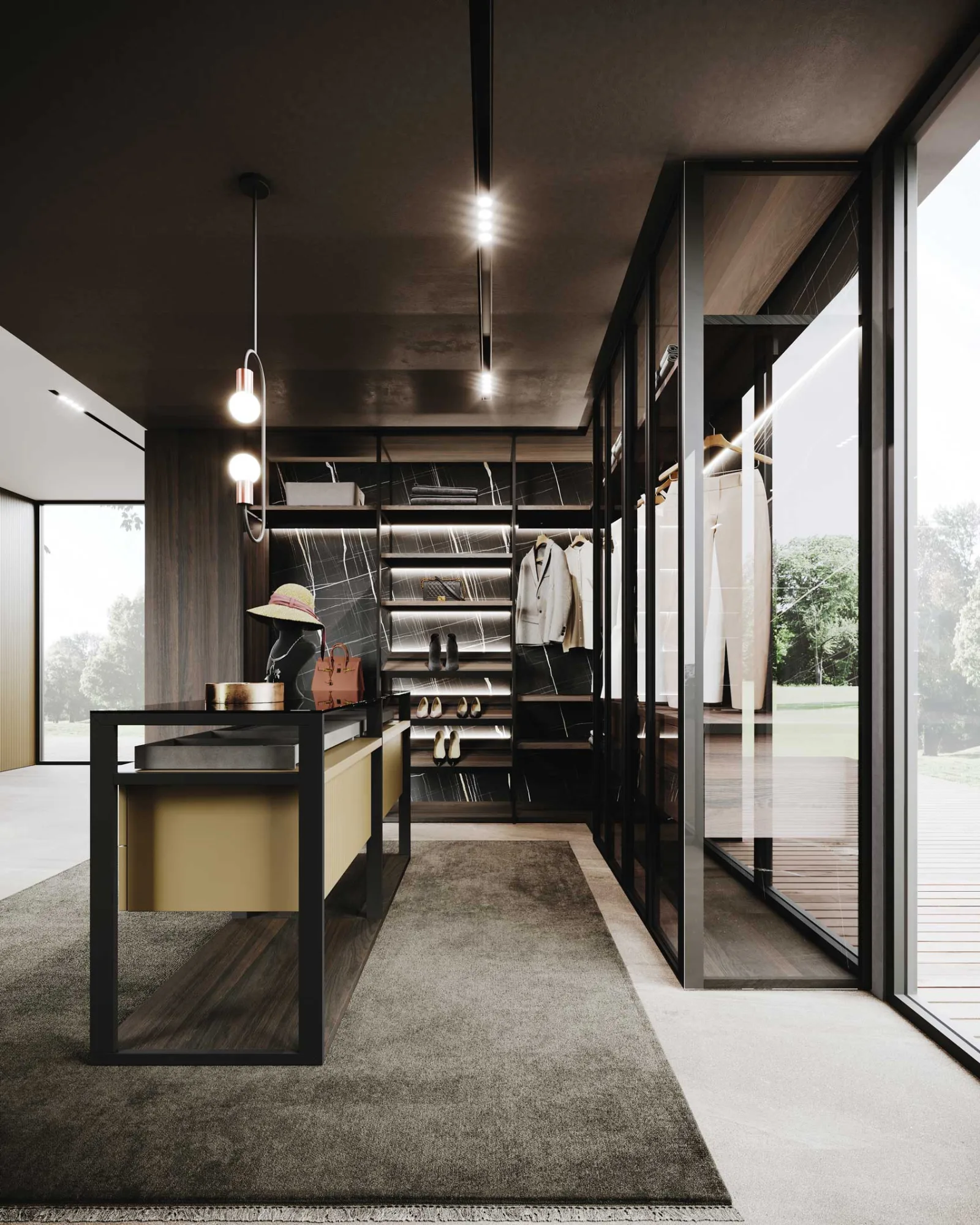
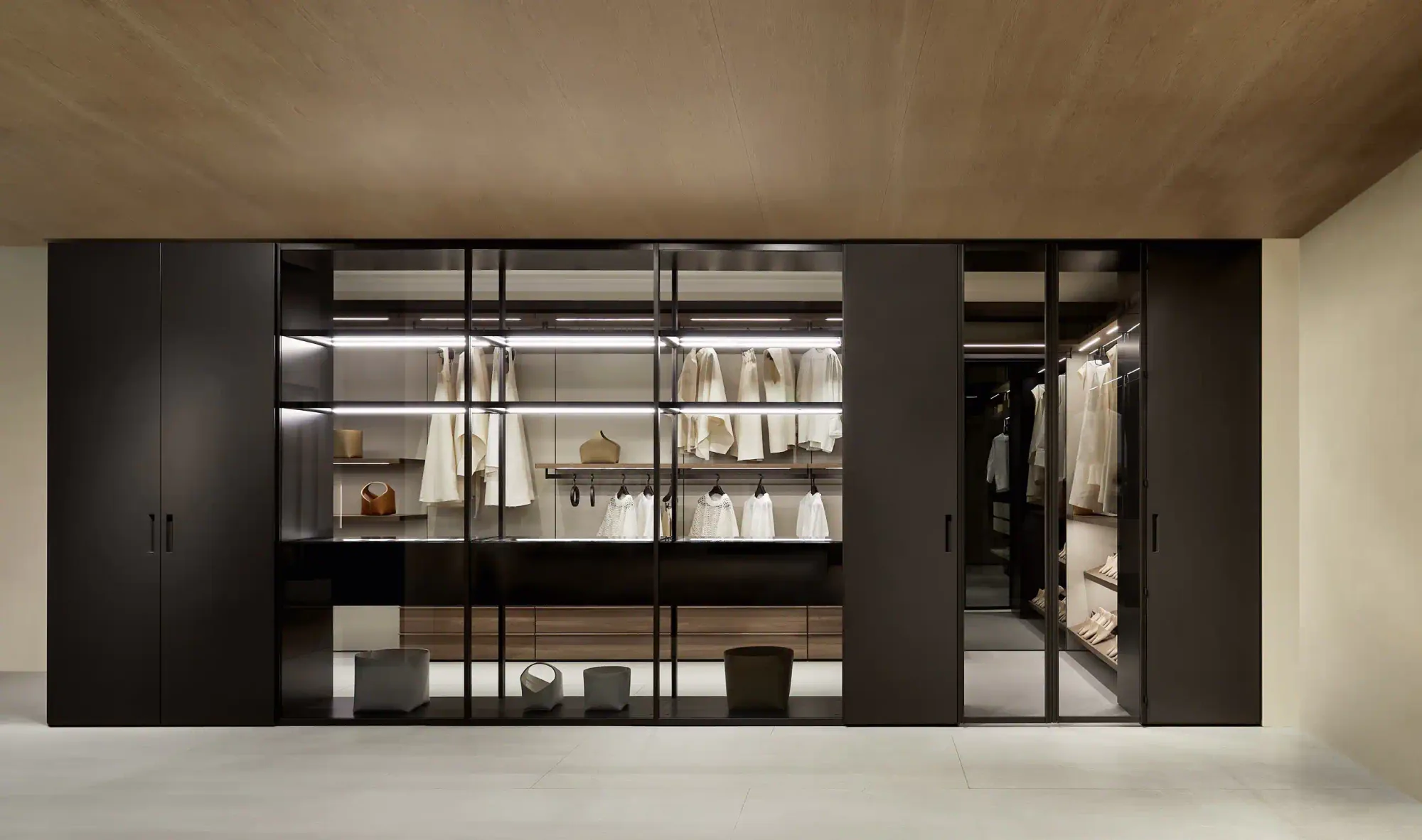
Combining aluminium and wood in the bedroom means relating two material families with very different perceptual qualities. Metal communicates precision, structural lightness and linear continuity; wood introduces chromatic depth, natural variation and a sense of warmth. When the relationship is carefully calibrated, the contrast does not divide the room but gives it balance: technical components organise the space, while timber surfaces soften its potential rigidity.
The success of this pairing does not come from adding a metallic finish to a wooden cabinet. It requires a clear hierarchy, coherent proportions and attention to the way materials age. In the bedroom, where comfort is visual and tactile, every reflection, colour temperature and construction detail contributes to the whole. The design must therefore establish which material forms the structure, which defines the volumes, and how both relate to textiles, lighting, flooring and walls.
Understand the identities of both materials
Aluminium is valued for its strength-to-weight ratio, the precision of its profiles and the possibility of creating slender sections. Anodising and coating can give it very different appearances, from natural tones to dark matt finishes. Its regularity supports grids, uprights, frames and details in which accuracy becomes part of the aesthetic language.
Wood, whether solid or used as a high-quality veneer or decorative surface, provides grain, variation and a softer response to light. Species, cut, selection and finish significantly alter the result. Pale oak creates a bright, measured atmosphere; deeper shades increase intimacy and visual density; pronounced grain makes the surface a protagonist.
These differences should not be erased. Trying to make metal resemble timber, or wood appear perfectly uniform, can reduce the richness of the combination. It is more useful to recognise their respective roles and build a relationship in which precision and natural variation strengthen one another.
Establish a hierarchy before choosing the palette
Before selecting colours, decide which material will dominate. In an open structure, aluminium may form the visible frame while wood appears on shelves, drawers and panels. In a more compact composition, timber surfaces may create the main mass, with metal defining edges, handles, bases or fine divisions.
An effective hierarchy can follow three models:
- technical structure and warm surfaces, with continuous metal profiles and timber planes;
- timber volume and precise details, with metal used for connection and protection;
- balance through distinct fields, in which the materials occupy separate but proportionate zones.
The first model feels lighter and more modular, the second more enveloping, while the third requires special control to prevent fragmentation. The decision should reflect room dimensions, the required amount of storage and the character already present in the interior.
Calibrate the proportions
The visible percentage of each material matters more than the number of components. Slender repeated profiles can have a strong impact despite occupying little surface area, while one timber panel may dominate an entire wall. To assess balance, the composition should be studied both frontally and in perspective, including the parts that clothes and belongings will later cover.
In compact bedrooms, a light framework paired with a limited number of warm planes preserves depth and brightness. In larger rooms, a stronger timber presence can consolidate scale and create a more welcoming atmosphere. However, extensive, highly figured wood may become visually heavy, while too much metal can make the scheme feel cold or overly technical.
Rhythm provides a solution. Repeating the same profile, aligning thicknesses and leaving regular intervals allows the materials to alternate without competing. Exceptions should correspond to specific functions, such as a drawer unit or back panel.
Coordinate tones and colour temperature
Aluminium is not only grey, and wood is not simply brown. Metal finishes may be pale, champagne, bronze, black or coloured; timber species range from nearly neutral to golden, reddish or deep shades. Pairings should consider undertones, meaning the warm or cool component perceived beneath the principal colour.
Matt black metal creates a clear contrast with pale wood and can draw a highly legible grid. Burnished or bronze tones accompany warm species with greater continuity. Light metallic finishes work well with pale timber and bright interiors, although they require care to avoid an overly uniform effect.
Real samples should be compared inside the room. Photographs and displays cannot faithfully reproduce reflections, grain and changes in light. Samples need to be viewed beside the floor, textiles and walls, both in daylight and under the planned artificial lighting.
Matt, satin and reflective surfaces
Finishes that control reflections are generally effective in sleeping spaces. Matt or satin aluminium retains metallic precision without creating energetic highlights. A low-sheen timber finish preserves depth and tactility while making fingerprints and small marks less apparent.
This does not mean eliminating every luminous contrast. A slightly more reflective detail can emphasise an edge or handle, provided that it remains subordinate. When many surfaces reflect simultaneously, light becomes fragmented and the atmosphere loses calm.
Texture also requires balance. Uniform metal can accompany pronounced grain; when timber is quiet, the metallic finish may carry slightly more character. Placing two highly expressive surfaces together often creates competition.
Integrate bedroom textiles and colours
The relationship between metal and wood extends beyond furniture. The bed, curtains, rugs and linen occupy much of the visual field and alter the perception of hard materials. Soft matt fabrics absorb light and sound, making a precise structure feel more comfortable; well-chosen textile colours can connect the timber undertone with the metal finish.
An effective palette can begin with a neutral background, one dominant timber and one metallic accent. Textiles may stay within related tones or introduce a controlled colour. It is best to avoid giving every element a different temperature: too many cool greys, yellow beiges, reddish woods and bronze metals in one space make the scheme difficult to read.
Coherence does not require exact identity. A timber floor need not match shelves and panels. Deliberate differences in tone or grain are more convincing than near matches that fail to align perfectly.
Design joints and contact details
The physical meeting between aluminium and wood is one of the most sensitive points. The materials behave differently in response to temperature, humidity and load. Wood and wood-based substrates may change dimensionally; metal remains more stable but can transfer concentrated forces. Joints, tolerances and fixing systems must allow accurate assembly without imposing stress.
Visually, the connection may be expressed or concealed. A fine profile can frame a panel and protect its edge; a recessed joint can make a shelf appear to float; a regular shadow gap can separate the materials while preserving each identity. Accidental solutions, with misaligned thicknesses or exposed screws lacking a clear logic, weaken the entire design.
Edges exposed to frequent contact deserve particular care. A metal profile may increase durability, but it should not feel sharp or excessively cold where users touch it every day. Ergonomics and tactile quality belong to the detail.
Use light to reveal rather than distort
Light profoundly changes the relationship between these materials. On metal it creates linear reflections and highlights precision; on wood it reveals pores, grain and chromatic variation. Lighting that is too direct may exaggerate every discontinuity, while excessively warm light can distort colours.
Diffuse ambient illumination should be combined with screened integrated sources. High colour rendering makes both materials and clothing easier to recognise. Linear lights may follow uprights or sit beneath shelves without turning luminous points into the main visual feature.
Before the final selection, samples should be assessed under the same colour temperature planned for the room. A neutral metal may appear warmer or bluer depending on the source, while timber can become yellow or lose depth. Testing prevents surprises after installation.
Tactile and acoustic comfort
The bedroom requires comfort at close range. Metal can feel cold to the touch, so it is often best reserved for structural elements and details, leaving wood and textiles on surfaces handled more frequently. Handles, edges and ledges should feel pleasant and avoid aggressive corners.
From an acoustic perspective, light structures and hard surfaces may vibrate or produce noise when joints and accessories are poorly calibrated. Felts, gaskets and soft-closing systems help control contact between components. The textile contents of a wardrobe contribute some absorption, but they cannot replace precise construction.
Perceived quality often comes from quiet movement: drawers that run without vibration, stable rails and shelves that do not resonate when an object is placed on them.
Different maintenance for lasting quality
Aluminium and wood require different care. Metallic surfaces should be cleaned with soft cloths and products compatible with the finish, avoiding abrasive or aggressive substances. Timber surfaces require minimal water, prompt drying and detergents suited to their treatment. Using the same product on both may cause marks or deterioration.
Dust is more visible on dark metals and highly uniform surfaces. It may be less obvious across grain but still needs removal. Joints and fixings should be checked periodically, especially when the structure is adjustable or demountable.
Long-term appearance also depends on repairability. Replaceable elements, standardised finishes and accessible connections make targeted maintenance possible. A durable project considers from the beginning how components will be cleaned, adjusted and, if necessary, renewed.
Sustainability and the life cycle
Both materials can support a responsible strategy when their origins, processing and separability are documented. Aluminium is recyclable, but primary production requires considerable energy. Wood is renewable when sourced from responsibly managed supply chains, although adhesives, substrates and finishes affect its overall profile.
The more sustainable combination is not automatically the one with less metal or more timber. Durability, actual quantities, construction quality, ease of disassembly and spare-part availability all matter. A system that can adapt and replace individual parts avoids complete renewal and extends the useful life of resources.
Reversible joints and materials that can be separated at end of life provide a practical advantage. Choosing finishes that are not tied to a short-lived fashion also supports the cultural longevity of the room.
Mistakes to avoid
A common mistake is distributing metal and wood equally without establishing a hierarchy, producing an indecisive composition. Another is selecting finishes from isolated samples without comparing them with the room’s light and existing materials. Repeating the same timber in almost matching versions can also create dissonance more obvious than an intentional contrast.
Other issues to avoid include:
- too many metal profiles in a small bedroom;
- strongly figured grain on every surface;
- glossy metal exposed to direct light;
- joints that ignore different tolerances;
- universal cleaning products that are not compatible;
- lighting colours that distort the palette;
- technical details left visible without precise design.
Every decision should be assessed together with the others, because the result depends on relationships rather than the isolated value of one material.
A balance between precision and warmth
Aluminium and wood can form a contemporary bedroom when they retain distinct identities and complementary roles. Metal provides order, slenderness and precision; timber contributes depth, tactility and variation that makes the room more intimate. Proportion, undertone, light and detailing determine the point of balance.
The most durable solution does not seek spectacular contrast, but measured coexistence. When the technical structure supports without dominating and warm surfaces welcome without adding visual weight, the bedroom gains clarity and comfort. The design becomes a coherent dialogue between technology and matter, conceived for daily use and lasting quality.